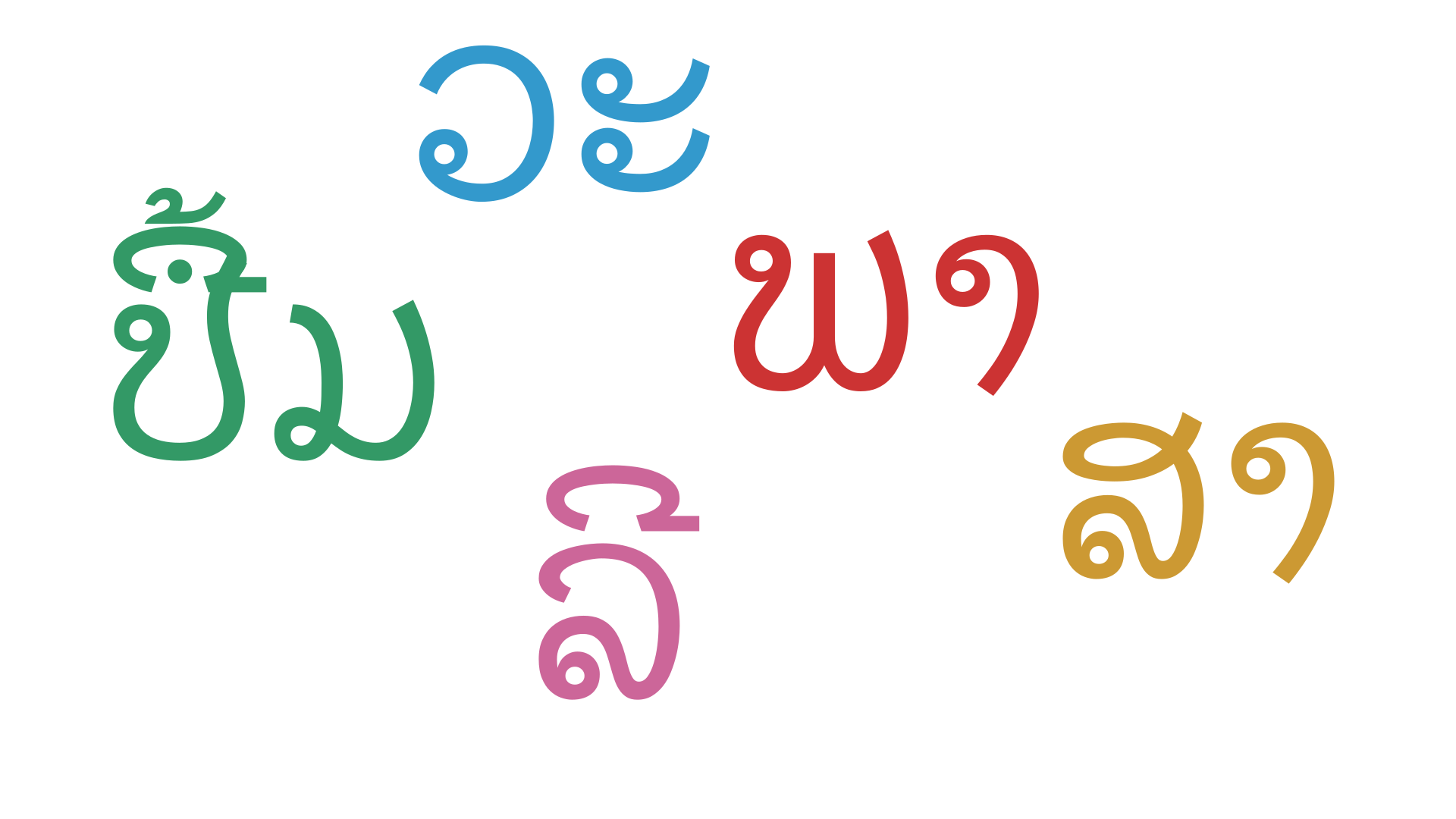
Laos, the former 'Kingdom of a Million Elephants', is a country where kindness, slowness, and respect dictate the pace of daily life.
To make your trip to Laos a total success and allow you to interact naturally with locals, here are the essential cultural points to remember before packing your bags.
1. The 'Bor Pen Nyang' philosophy: The Lao art of living
In Laos, there is no place for stress. The phrase you will hear most often is 'Bor pen nyang' (ບໍ່ເປັນຫຍັງ), which means 'It's okay' or 'No problem'. Whether there is a bus delay, a power outage, or a small mistake at a restaurant, keep smiling! Getting angry or raising your voice causes loss of face (for you and the person you are talking to).
💡 Did you know? Instead of the classic 'How are you?', Laotians will very often ask you 'Kin khao laew bo?' (ກິນເຂົ້າແລ້ວບໍ່ — Have you eaten yet?). It's a warm greeting that shows they care about your well-being.
2. Respect and social hierarchy by age
Lao society is highly respectful of age. In our guide, you will notice that pronouns change depending on the person you are talking to:
-
Ai (ອ້າຍ)
: Used to address a man slightly older than you (Older brother).
-
Euay (ເອື້ອຍ)
: For an older woman (Older sister).
-
Nong (ນ້ອງ)
: For a younger person.
-
Golden rules of the human body
: In Buddhism, the head is the most sacred part of the body, and the feet are the most impure part. Never touch someone's head (even a child's) and never point your feet at a person, let alone a Buddha statue.
3. Lao gastronomy: Sticky rice, spice, and sharing
Eating is a social activity par excellence. Dishes are placed in the center of the table and shared.
-
Khao Niao (Sticky rice)
: This is the staple food. It is served in a small bamboo basket (Tip khao) and eaten with the fingers by rolling it into small balls.
-
Adjusting flavors
: Lao cuisine (like the famous Laap or Tam Mak Houng papaya salad) can be explosive! Quickly learn to say 'Bo hai phet' (ບໍ່ໃຫ້ເຜັດ — Not spicy) if you are sensitive to chili. Also beware of MSG, which is widely used in Asia: do not hesitate to specify 'Bo sai paeng nua' (ບໍ່ໃສ່ແປ້ງນົວ — No MSG).
-
Time for a drink
: The Beerlao (national beer) ritual is a must. Get ready to raise your ice-filled glass and shout 'Tam chok!' (ຕຳຈອກ — Cheers!).
4. Getting around: From tuk-tuk to high-speed train (LCR)
Transport in Laos is an adventure in itself:
-
Negotiating with a smile
: Whether you are taking a Tuk-Tuk or buying souvenirs at the night market, haggling is a custom. Always do it in good spirits.
-
The Laos-China Railway (LCR)
: This new high-speed train has revolutionized travel (e.g., Vientiane - Luang Prabang). Note that security checks are airport-level! Your passport is mandatory to buy a ticket and board, and items like knives or aerosols are strictly forbidden.
-
On the Mekong
: The slow boat crossing is a legendary experience for appreciating the country's wild nature.
5. Money and practical life (Toilets, Laundries, Homestays)
-
The QR Code payment boom
: Although cash (the Lao Kip) is still king in villages, you will see 'BCEL One' signs everywhere. This is the local banking app that allows you to pay for everything by scanning a QR code, even for a simple skewer on the street!
-
Hygiene and toilets
: Outside of hotels, get ready for 'Lao-style' toilets. Toilet paper is often absent (and must never be thrown in the bowl). Flushing is often manual: you use a small bucket (Khu tak nam) to scoop water from a large tub and clean the bowl.
-
Accommodation and Homestay
: During a trek, you will surely sleep in a homestay. Always remove your shoes before entering a Lao home or temple.
6. Religion and essential customs
-
Tak Bat
: This is the morning alms collection by Buddhist monks (very famous in Luang Prabang). If you participate or take photos, keep your distance, cover your shoulders and knees, and remember that a woman must never touch a monk or his robes.
-
The Baci (Phuk khaen)
: This is the Lao ceremony par excellence. White cotton threads will be tied around your wrists to call back your souls and wish you luck and health. Don't cut them right away; keep them on for at least three days!
-
Pi Mai (Lao New Year)
: Celebrated in April, it's the water festival. Everyone takes to the streets to splash each other in joy and music (Lamvong).