Learning Guide for the
Sinhala Alphabet
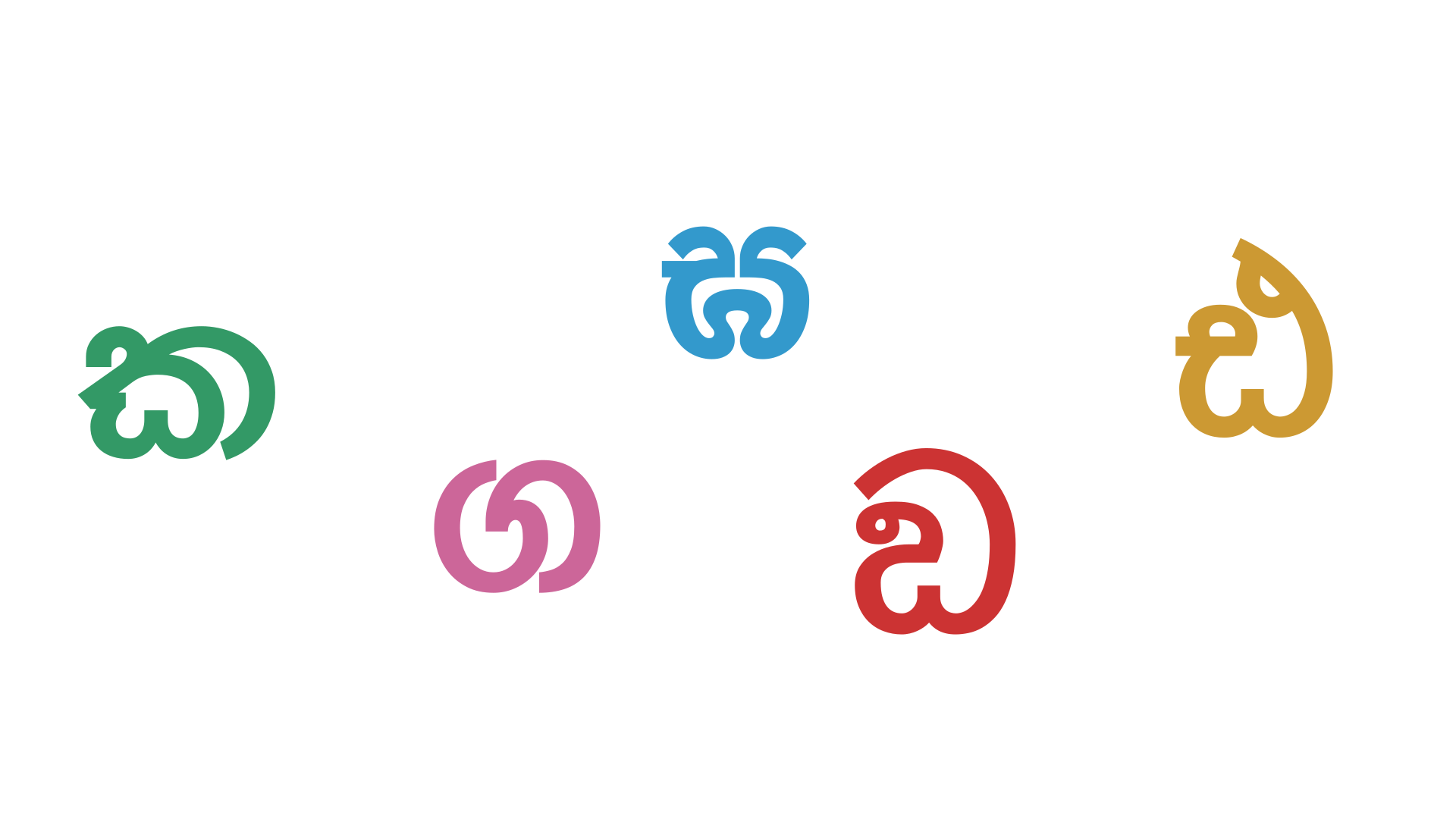
The Sinhala alphabet, derived from the ancient Brahmi script, is an abugida writing system that has evolved to meet modern communication needs. It consists of 41 consonants and 18 vowels, although some sources cite slight variations due to additional characters used in classical or Sanskrit loanwords. The script includes both independent and dependent vowel forms, with the latter used in conjunction with consonants to form syllables. Consonants are modified by diacritical marks to represent different sounds, following an abugida structure where each character typically represents a consonant with an inherent vowel. This complex system allows for a rich phonetic representation, making Sinhala writing both intricate and versatile.
සිංහල අක්ෂර මාලාව
Introduction
The Sinhala script, used to write the official language of Sri Lanka, traces its origins to the Brahmi script of ancient India, transmitted through the Pallava script of South India. Attested in Sri Lanka from around the 3rd century BCE, it developed distinctive rounded letterforms over the centuries, shaped by palm-leaf manuscript traditions and the phonetic needs of the Sinhala language.
The Sinhala alphabet is an abugida consisting of 41 consonants and 18 vowels, along with diacritical marks such as the anusvara (ං). Each consonant carries an inherent vowel (usually the sound "a") that can be modified or removed by adding vowel signs. Unlike Latin alphabets, vowels appear either as independent letters or as signs placed around the consonant — before, after, above, or below — to form a syllable. Sinhala is written from left to right.

How it works?
The Sinhala alphabet consists of 41 consonants and 18 vowels. Since all Sinhala words are made up of syllables, let's look at how a syllable is formed.
Composition
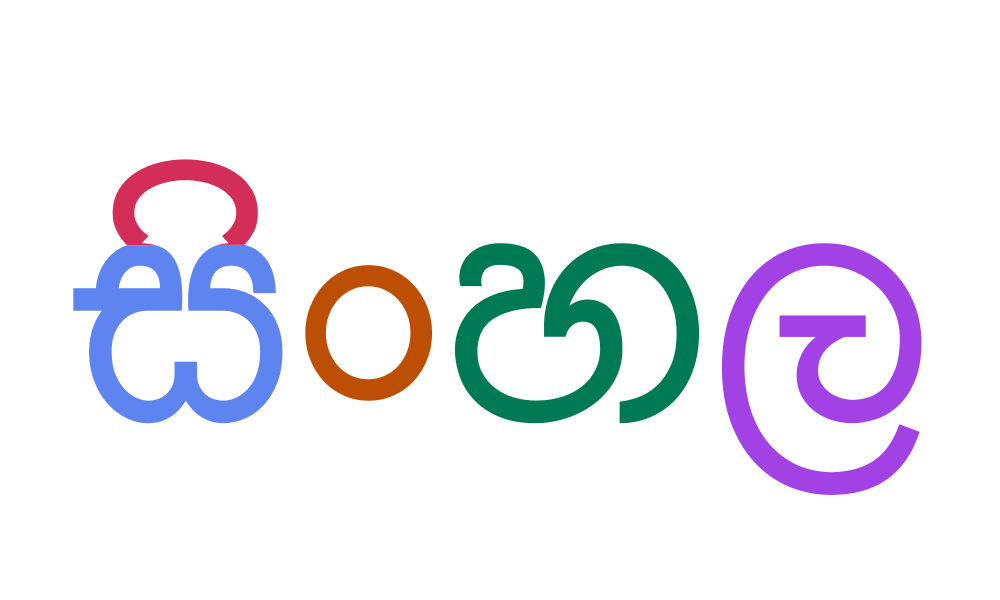
(Sinhala)
The word « Sinhala » (සිංහල): ස + ි forms si (සි), the anusvara ං nasalizes the syllable (සිං), then හ + ල forms hala (හල).
- A syllable contains at minimum a consonant and a vowel
- Each consonant has an inherent vowel that can be modified by a vowel sign
- Vowels are placed around the consonant: before, after, above, or below
- The anusvara sign (ං) nasalizes the preceding syllable