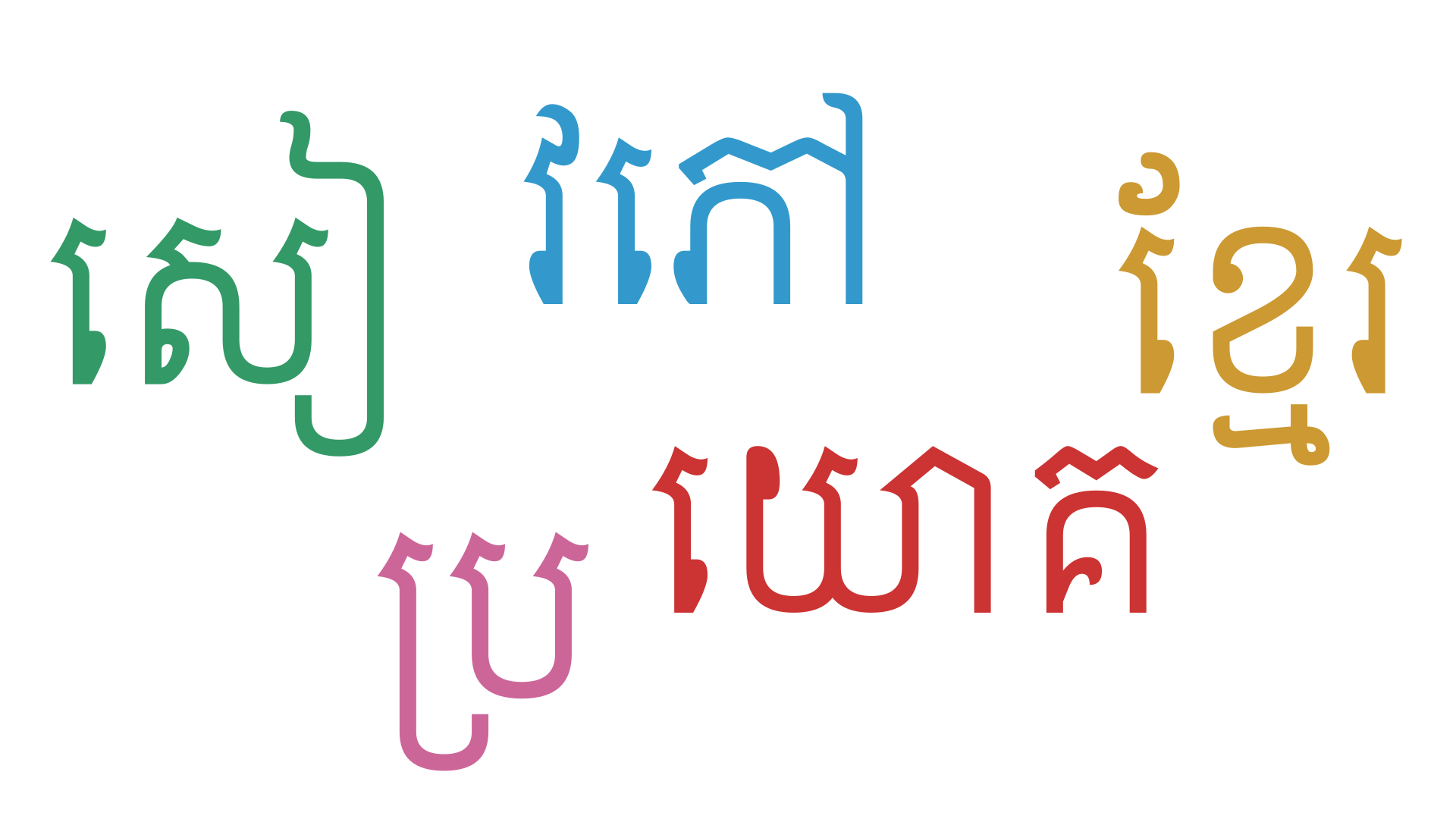
Mastering the language of a country is above all about understanding its culture. To speak Cambodian naturally, you need to grasp the social codes, lifestyle habits, and the famous local 'etiquette'.
This 1000-phrase conversation guide is designed to immerse you in the reality of today's Cambodia. Here are the essential cultural keys to properly use this lexicon and succeed in your trip or expatriation in the Kingdom of Wonder.
1. Khmer politeness: Forget 'I' and 'You'
In Cambodia, social hierarchy and age dictate how you address others. In this guide, you will notice that classic personal pronouns are often replaced by affectionate kinship terms.
-
Bong (បង) / Oun (អូន)
: To address someone slightly older ('older brother/sister') or younger.
-
Pou (ពូ) / Ming (មីង)
: 'Uncle' and 'Aunt', to respectfully address tuk-tuk drivers, market vendors, or people your parents' age.
-
The magic word 'Som' (សូម / សុំ)
: Placed at the beginning of a sentence, it softens any request. It's the essential equivalent of 'please'.
2. The culinary obsession: 'Have you eaten yet?'
Food is at the center of Cambodian social life. In fact, the most common greeting to check up on a loved one is not 'How are you?', but rather 'Nham bay haey nov?' (ញ៉ាំបាយហើយឬនៅ — Have you eaten yet?).
-
The culture of sharing
: At a restaurant, dishes are ordered for the table and shared.
-
Local specificities
: You will quickly learn to order your iced coffee with condensed milk, or to ask for your street food 'without bicheng' (without MSG), a very useful survival phrase found in our guide!
3. Riel or Dollar? The art of shopping at the Phsar
Cambodia has the particularity of having a dual-currency economy. You can pay interchangeably in Cambodian Riels or US Dollars (USD).
-
The requirement for pristine bills
: A golden rule you will find in the guide: dollar bills must be flawless. A slightly torn or stained bill will be systematically refused.
-
QR Code payment (ABA)
: Cambodia has made an impressive technological leap. From the fruit vendor at the central market to the motorbike driver, everyone accepts payment via QR scan.
-
Haggling
: At the Phsar (ផ្សារ — market), negotiating is a social game. Asking for the 'Khmer price' with a smile is the best way to get a good rate.
4. Getting around: The Tuk-Tuk adventure
Forget the subway! In Cambodia, people get around by Tuk-tuk or Motodop (motorbike taxi).
-
Ride-hailing apps
: The use of apps like PassApp or Grab has become the norm. However, the driver will almost always call you to confirm your location, hence the importance of the guiding phrases in our lexicon.
-
Finding your way
: Instead of using street names, Cambodians often navigate by visual landmarks: 'in front of the pagoda' (Wat), 'next to the market', or 'near the traffic light'.
5. Beliefs, Health, and Tropical Climate
The tropical climate and traditional beliefs greatly influence everyday vocabulary.
-
The 'Khjol Kor' (Wind illness)
: More than just heatstroke, this is a widespread Khmer medical concept used to describe a general feeling of unwellness. It is often treated using the 'coining' technique (scraping the skin with a coin).
-
Respect for religion
: Buddhism permeates daily life. You always remove your shoes before entering a house or a pagoda. Another strict rule covered in the guide: women must never touch a Buddhist monk or his robes.
6. The importance of family and smiling
Cambodia is known as the Land of Smiles. Keeping your calm, never raising your voice during a conflict (to avoid 'losing face'), and smiling are golden rules. Cambodians are very curious and will quickly ask questions about your marital status, age, or children: it is not indiscretion, but a genuine desire to connect and place you in the social hierarchy (so they know whether to call you Bong, Pou, or Ta!).